What are you doing on May 5th? Whatever you’re doing, take pictures of it, and then you can participate in the 24 Hours of Flickr event. The idea is to record a day in the life of the many and varied members of Flickr. The best pictures will be showcased at Flickr events over the summer, and a selection of pictures chosen to be made into a book. All you need to do is join the “24 Hours of Flickrâ€? group, and remember to take pictures on May 5th.
Monthly Archives: April 2007
Theological Hoop Jumping
A few weeks ago I commented on the brewing row over the meaning of Easter caused by an upcoming talk by the controversial Dean of St Albans, Jeffrey John. Subsequently John has responded to the criticism through the Church Times, and Bishop Tom Wright has produced an extensive article expressing why his original criticisms were valid.
Included in the prominent critics were Bishops Wallace Benn and Pete Broadbent who followed along from Bishop Tom Wright and released a statement from Spring Harvest condemning the talk – without having read it. However this takes on a more interesting twist with the news that the UCCF are withdrawing from Spring Harvest because of the involvement of Steve Chalke as a result of his beliefs first mentioned in his book The Lost Message of Jesus and which Chalke himself summarises online. Whilst the UCCF believe that Chalke has diverged from orthodox Christian teaching – the same accusation that has been levelled at Jeffrey John – Bishops Benn and Broadbent are happy to work with Chalke, but are releasing press statements criticising John.
Needless to say, this can lead pretty easily to the conclusion that John is being attacked because of who he is, rather than what he is saying – so Tom Wright talks about Chalke in the article too. However, having read the relevant passage:
Now, to be frank, I cannot tell, from this paragraph alone, which of two things Steve means. You could take the paragraph to mean (a) on the cross, as an expression of God’s love, Jesus took into and upon himself the full force of all the evil around him, in the knowledge that if he bore it we would not have to; but this, which amounts to a form of penal substitution, is quite different from other forms of penal substitution, such as the mediaeval model of a vengeful father being placated by an act of gratuitous violence against his innocent son. In other words, there are many models of penal substitution, and the vengeful-father-and-innocent-son story is at best a caricature of the true one. Or you could take the paragraph to mean (b) because the cross is an expression of God’s love, there can be no idea of penal substitution at all, because if there were it would necessarily mean the vengeful-father-and-innocent-son story, and that cannot be right.
where option (a) is the acceptable interpretation of the Chalke statements, whereas (b) is the interpretation that UCCF and most other people have taken. Tom Wright and I assume Bishops Benn and Broadbent take the view that Chalke meant (a).
From my point of view, looking at what Chalke himself says he says the following:
In my view however, the real problem with penal substitution (a theory rooted in violence and retributive notions of justice) is its incompatibility, at least as currently taught and understood, with any authentically Christian understanding of the character of God or genuinely Christocentric worldview…
which strikes me that Chalke is saying that he has the same issue with the traditional understanding of penal substitution as John, but that Tom Wright is doing some fairly subtle theological hoop jumping to argue why what Chalke says is acceptable and John isn’t.
Tom Wright doesn’t help with drawing conclusions that this is personal either. During the course of the nearly half the article where he picks the John talk apart, he at one point uses an example that focuses on Jeffrey John’s sexuality, and alludes to the title of his well known booklet on the subject. Jeffrey John’s letter to the Church Times mentions that much of the hate mail related to the talk focused on his sexuality – when Tom Wright mentions John’s letter he brushes it aside with a ‘we all get hate mail’ type comment, totally ignoring the sexuality aspect, before going on to make comments that could be considered in the same vein. When he starts talking about Chalke he notes that he knows him personally, indeed he got a pre-release copy of the book. He also highlights that the book may be unclear over what Chalke believes, but then says that he has had a chat with Chalke and is happy that he does believe in penal substitution but under another name. He finishes the section on Chalke with this statement:
And this leads to the key point: there are several forms of the doctrine of penal substitution, and some are more biblical than others. What has happened since the initial flurry of debate about The Lost Message of Jesus has looked, frankly, like a witch-hunt, with people playing the guilt-by-association game: hands up anyone who likes Steve Chalke; right, now we know who the bad guys are.
Unfortunately, as with anything with such subtle differences for those of us without doctorates of Theology it really isn’t that clear what the difference is, between what Chalke believes and what John has said. In the book, Chalke states this:
If the cross is a personal act of violence perpetrated by God towards humankind but borne by his Son, then it makes a mockery of Jesus’ own teaching to love your enemies and to refuse to repay evil with evil. The truth is, the cross is a symbol of love. It is a demonstration of just how far God as Father and Jesus as his son are prepared to go to prove that love.
He then uses Elie Wiesel as an example to make the point.
Jeffrey John says this in his talk:
Because he is Love, God does what Love does: He unites himself with the beloved. He enters his own creation and goes to the bottom line for us. Not sending a substitute to vent his punishment on, but going himself to the bitter end, sharing in the worst of suffering and grief that life can throw at us, and finally sharing our death, so that he can bring us through death to life in him.
As with Chalke, he then goes on to use Elie Wiesel as an example to make the point. Both Chalke and John are disagreeing with penal substitution and saying that it is about love, not vengeance, yes there are differences in what they are saying, and how they say it, but they are largely coming at it from the same direction. The difference between the two is that Chalke has a quote from a certain Tom Wright on the cover of his book commending the scholarship, whilst Jeffery John gets Tom Wright criticising him in the Sunday Telegraph, he then gets Wright producing an epic critique of the talk on Fulcrum.
Ultimately it stinks of being theological sleight of hand buried in pages and pages of exposition to try and avoid accusations of hypocrisy that can be levelled at those involved, Tom Wright especially. Finally, what about the UCCF and their Spring Harvest walkout? Much as I don’t agree with the beliefs of the UCCF, and probably would object to what they are teaching, at least they’re actually being consistent between what they believe and their behaviour, which is more than can be said for certain bishops.
(Thanks to Dave Walker for keeping track of the debate.)
Licence to Cut
Airlines often edit movies for in-flight viewing, taste and suitability being the official reason for cuts, however the cuts British Airways have made to Casino Royale are really quite amusing. During the Miami Airport sequences Richard Branson gets a cameo as a passenger stopped and frisked at security, with a Virgin Atlantic jet turning up a few minutes later. Both have been cut from the British Airways in-flight version. I wonder why?
Daleks do Manhattan

So blow the whole cliff-hanger why don’t you… There is a comment from Russell T that he couldn’t very well turn down a Radio Times cover, which I guess is true, but you can do it without blowing the entire climax of the episode by doing so!
Anyway, aside from having the shocking revelation of the Hybrid Dalek ruined by the Radio Times, the rest of the episode was really good. The new Doctor Who stories are quite often either fairly frenetic, or fairly straightforward with their plots in order to fit into the 45 minute stories, however thanks to this being a two-part story, we at least got some better pacing, and a broader range of characters, this is apparent right from the start.
The pre-credit sequence starts back-stage at a theatre in 1930’s New York, with the star of the show Tallulah with her boyfriend Laszlo. As Tallulah goes on stage to do her act, Laszlo hears strange noises coming from a store room and goes to investigate, finding a strange pig faced man who kidnaps him and takes him into the sewers.
The Doctor and Martha arrive on Liberty Island. We discover later, two weeks after Laszlo’s disappearance. They find a newspaper which is reporting mysterious disappearances of people from Hooverville, the shanty town built in Central Park by people who have lost their homes as a result of the Great Depression. Ever one to be intrigued by a mystery, the Doctor and Martha go to investigate.
Meanwhile, in the nearly finished Empire State Building, although work is continuing quickly, it’s not quick enough for the new owners of the building. Through Mr Diagoras they are trying to get the mast on the top of the tower finished by night fall – when the foreman says that it isn’t possible, the new owners of the building are revealed to be the Daleks, and the uncooperative foreman is taken away by a Dalek and two pig faced henchmen. The Daleks are in the midst of a series of experiments, and need more humans, so Mr Diagoras is despatched to Hooverville to recruit workers for a ‘job’ clearing a blockage in the sewers.
Arriving at the Hooverville, Mr Diagoras recruits the Doctor and Martha along with two others, and they are sent off to find the apparent blockage. However there is no blockage, and as the Doctor starts to wonder what is really going on, the group is cornered by a group of pig faced men.
All in all, the production team have done a great job of producing something that looks like New York in the thirties, all without having to do much filming outside Wales. (Although I note from the behind the scenes stuff that Phil Collinson, Helen Raynor and the effects team got a jolly to New York even if the actors didn’t!) There are also a number of impressive vistas of the city, as part of the action takes place on top of the Empire State Building itself.
This is a bit of a different Dalek story for the new series too. Aside from the appearance in Dalek, there have only been vast armies of Daleks. Here we have a much smaller, scheming Dalek plot. The only Daleks present are the four members of the Cult of Skaro who have managed to escape at the end of Doomsday and realising that they are alone are trying to preserve the Dalek race by a series of genetic experiments. They have also created the pig faced henchmen from the people who aren’t considered intelligent enough, in order to help them in their work. In many ways this is reminiscent of Dalek stories back in the sixties and seventies where the Daleks are a malevolent force in the background using henchmen to do much of the work. In this case, Dalek Sec believes that the purity of the Dalek race has been a hindrance, indeed one of the other Daleks in a rare moment of conversation with Mr Diagoras states that humans always survive. As a result Dalek Sec is trying to produce a Hybrid Dalek using himself as the guinea pig.
Alongside the Daleks we get some nice characterisation from the other actors. Mr Diagoras is very tough with the human workers, but at other times is obviously frightened of the Daleks, especially when he discovers that the Daleks are effectively going to reward him by killing him to become part of the Hybrid Dalek. There are also some good characters in the Hooverville with the two episode format allowing for a bit of background explanation as to what is happening. We also have the love story between Tallulah and Laszlo, with both of them joining with the Doctor in the later part of the episode. Interestingly the Doctor also actively avoids any sort of confrontation with the Daleks throughout the episode, even getting Martha to step forward to challenge them at one point rather than draw attention to himself. We also get to see his frustration in that ‘they always survive’.
As with so many of the two part stories, this episode was essentially laying out the pieces for the conclusion next week. Although we got to see the Hybrid Dalek, this didn’t explain the reasons for the modifications to the mast on the top of the Empire State Building, and exactly what is going to occur that night that required it to be completed. It will also be interesting to see whether the three remaining non-hybrid Daleks survive, in an obvious way, such as the ’emergency temporal shift’ that was shown in Doomsday, or whether they’ll all be apparently wiped out. Whatever happens though, I’m sure we’ll be seeing the Daleks again – having won the recent online vote for the scariest monster and Russell T admitting on a number of occasions that they are his favourite, we’re sure to see them back whatever happens.
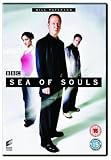
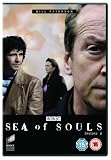
Sea of Souls
The BBC doesn’t quite seem to know what to do with Sea of Souls. After the first series they replaced two out of the three major characters, and in series three they went from three two part stories in the series to six single episode stories. ‘Series 4’ which was shown this week on BBC1 was in actual fact just a single two part story, and whilst it obviously had a bigger budget, and was definitely more glossy looking, they had again done away with two out of the three major characters, and it largely stands separate from the previous series, leaving the only consistent aspect of the programme being Bill Paterson, in the starring role as Dr Douglas Monaghan.
Despite the changes of format, this new Sea of Souls was as spooky as ever. The story opens with a couple arriving at a deserted and near derelict house in Scotland, and with Dr Monaghan working on a book about The Golden Dawn, and the Cipher Manuscripts on which the organisation was based.
Working on the derelict house, the couple find a strange painting on the wall under the wallpaper, and the wife posts a picture of it on the internet. This comes to the attention of Monaghan – it shows that someone in the house was a member of The Golden Dawn, and Monaghan asks for permission to investigate further.
Arriving at the house, he also finds that the wife has been having strange experiences – voices coming from radios when they are turned off, and later she starts to have visions. As Monaghan investigates the house further, he finds evidence that alongside The Golden Dawn, Palo rituals were being carried out too with symbols associated with the rituals carved in the floor.
Like a number of previous Sea of Souls plots, this had it’s twists and turns, and a pretty big twist just towards the end which finds Monaghan, on a research trip to London, rushing back up to Scotland. The extra budget is clear, with luscious and glossy cinematography, and the whole story fairly obviously being done entirely on film and on location – even for the University sequences, where Monaghan now has a very grand office. There are also a number of grand sweeping helicopter shots of the Scottish landscape, and some location filming both inside and outside at the British Library down in London.
Having said that, with the big budget and locations, we’ve also lost a lot of the main character interplay, and university politics elements of the previous story, essentially this is one story. As such it is a somewhat slower paced drama, with a definite slow burn in some respects.
Despite the loss of the character interplay, there is some interesting character development. In earlier series, Monaghan was a confirmed sceptic, always looking for a rational explanation. During the third series he seemed to change somewhat, finding things that he just could not explain. In this episode he mentions his wife and child, his wife having died in childbirth many years ago, followed by the baby, and how he admits that he saw his wife at their funeral, and that was what started his work with the paranormal. He is also very ready to believe in the presence of spirits in the derelict house.
There is a fairly stylised blending between the present day house, and the house in the past, partly because it is the spirits of the previous occupants haunting the building, but at times this is also showing the audience events that occurred in the past, essentially keeping the audience a few steps ahead of Monaghan as he investigates. Having said that although there are hints, the final twist comes as a surprise, and in the last fifteen minutes or so we get a tumbling of revelations and realisations, and a classic creepy Sea of Souls ending that really leaves you wondering if that is really the end.
Unfortunately, with the big budget, this is the only story we’re going to get at least for the near future. It was definitely spooky, and whilst it looked good, it is a shame not to have any more…
If you find yourself needing some more of the series, the first two series are still available on DVD.