Tag Archives: Genesis

Back to the Present – Genealogies and The Flood

Dr Laurence Turner

After an evening with the Bishop last week, the Lent Lecture this week is again a total change of direction, with a session talking about Old Testament Theology from Dr Laurence Turner, in particular looking at the Genealogies and the Flood narrative in the book of Genesis.

This was the first appearance of a laptop and the digital projector of this years lectures, so apologies for the slightly gloomy picture.

It was definitely a very interesting evening, and certainly a lot of information to take in during the time. Luckily, the material was in part taken from Laurence’s book, Back to the Present: Encountering Genesis in the 21st Century, of which he had some copies available, so I’ll be able to take a look in more detail.

First of all he started by looking at the Genealogies – the book of Genesis has a number of these, and as he said, they are usually regarded as pretty boring. However by looking at several of these he highlighted patterns in their construction. For example the first genealogy in the book is right at the beginning, and is the ‘genealogy’ of the elements of creation, where God creates on the first six days, and then the seventh is left holy. The significance of the number seven is repeated in other genealogies in various ways. The significance of the number seven continues into the New Testament too. The key point that he is making is that by merely looking at the genealogies as some sort of family tree we are missing a lot of the significance. The sections – even down to the ages – are carefully constructed in terms of the pattern so that when the pattern is broken it indicates something significant.

He then looked at the story of Noah and the Flood – a story that is well known, but again is interesting in how it is written, in particular the fact that it interrupts one of the genealogies, and also due the symmetry of the story. Based around a key verse, that being the beginning of Genesis Chapter 8, the story can be divided up into a number of sections, all of which are arranged in a mirror image in the two parts of the story, so for a simple example the flood begins and the waters rise in the first part of the story, the waters fall and the flood ends in the second part – obvious – but the mirror extends throughout the whole story, with for example the violence in the world being mirrored by God’s covenant of blessing and peace. And the key verse around which the whole story is centred, “But God remembered Noahâ€? – the point where Noah is saved by God.

Certainly it was an interesting and eye-opening evening, and I shall certainly be reading the book and hopefully understanding a bit more about the significance of some of the familiar and not so familiar parts of Genesis. What the evening really highlighted is that reading the book at a shallow purely literal level, you miss a whole load of more subtle information and meaning. Much as with the structure of the Gospels, how the book is written and arranged tells us much more about what the stories are trying to say – in the same way as apparently simple New Testament parables such as the Good Samaritan encapsulate much more complex ideas and meaning, the familiar Old Testament stories do the same.
A Tour of the Creationist Museum

Back at the end of last year, the BBC ran an article about the Creation Museum, a 60,000 square foot multi-million dollar museum that promotes an understanding of the origins of life, the universe and mankind based on a literal reading of the book of Genesis.

The museum has just recently opened, and so being based fairly close by Ars Technica have taken a field trip to see what it is all about. There is also a Flickr Set of their pictures.

Included are answers to the questions as to why poisonous frogs aren’t poisonous in captivity and why if Adam and Eve were the first two humans it wasn’t considered incest for their children to marry. There are also explanations of why humans and dinosaurs were able to coexist (the dinosaurs were vegetarian apparently) and how all the animals were able to get along together on Noah’s Ark.

Much like The Holy Land Experience, tours like this are probably as close as I’ll get to visiting the real thing, as I suspect my dear wife would probably not allow me anywhere near for fear of what might happen if I did…

How Live is Live?

We saw part of The Culture Show on BBC2 this week, which amongst other things included the launch of a campaign by the Musicians Union to provide an on-screen indication of whether a musical performance is mimed or live.

The campaign has been launched following an ICM poll that had found that 71% of the public would like some sort of indication. They then had different artists giving their opinion, Beverley Knight arguing for the indication, and Faye Tozer, former member of Steps arguing for the benefits of miming.

Perhaps the most interesting part of the item was the discussion with a Top of the Pops producer. Top of the Pops like other similar shows such as CD:UK have a mixture of people miming, people singing live to a backing track, and occasionally fully live performances. The item included some footage of live shows where the singer couldn’t hear the backing track, and some footage of Oasis who apparently have never sung live on Top of the Pops because it meant that they wouldn’t be able to drink before the performance! In the initial interview, the producer said that in a show with so many different acts in a short space of time, it was very complicated to have them all play live and be properly set up. He then justified it by saying that in his opinion people weren’t bothered too much by miming. What was interesting was his pretty surprised reaction when the interviewer quoted the results from the poll.

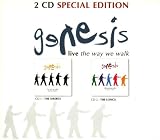
From a personal point of view, especially if I’m paying good money, I feel short changed if it isn’t live. To be frank if I wanted to hear a recording, I could go down to a record shop and get a CD! The same is true about TV shows. I haven’t watched Top of the Pops for years, however the one programme I do watch from time to time is Later with Jools Holland, which was noted on The Culture Show item as being about the only show on TV that is 100% live. What they do on Later is take advantage of the live medium to do special versions of songs, or to put interesting combinations of artists together. Indeed some of the older albums I listen to frequently are live recordings, CD’s such as “Way We Walk Vol.2â€? by Genesis which is a set of six live songs the majority of which run for between ten and twenty minutes. Another favourite is the live version of Sgt Peppers Lonely Hearts Club Band that Paul McCartney has on “Tripping the Live Fantasticâ€?. Here he combines the original song with the original reprise – which is in a different key – into one six minute performance by almost three minutes of guitar solo by both Paul and another guitarist, passing the solo back and forth across the stage, still one of my favourite performances of the song. So do I think that the liveness of a performance should be highlighted? Absolutely, whatever people may say about how miming gives bands the opportunity to put on more of a show, ultimately what I’m interested in is the music!